Each prosthesis made by Boland Prosthetic & Orthotic Center is custom designed and hand crafted to meet your specific needs. The high tech components such as microprocessor controlled knees and energy storing and/or multi-axial feet have greatly improved the lives of many patients. We are always excited about these advancements in our field, however, a comfortable and functional prosthesis begins with a properly fitted socket. The socket is the part of the prosthesis that is the interface of the prosthesis with the residual limb. The first question we often address is how do we want to suspend or hold the prosthesis on the limb. The suspension of the prosthesis is vital to the comfort of the socket as well as the health of the skin. Many of the suspension devices also serve to provide a second skin affect protecting the limb from friction.
By thoroughly addressing and discussing these options during the evaluation we ensure that you know what your choices are and why you may prefer one over another. Our process of innovation is simple, we try to give people what they want and most importantly what they need.
Incorporating High-Fidelity Interface technology into an above knee socket enables the socket to capture and control the underlying femur, which solves many of the problems posed by traditional sockets. High-Fidelity Interface technology employs an alternating compression and release design. In its most common application, four longitudinal struts apply aggressive centripetal (inward) compression, and windows between these struts enable the displaced soft tissue to release outwardly, essentially allowing volume to escape. When motion and force are captured closer to the bone, the prosthesis reacts more precisely and the brain reacts more instinctively. The result is dramatically enhanced performance, greater energy efficiency, security, and safety, increased endurance, greater comfort, and a higher level of confidence for wearers of all activity levels. Less fatigue means potential for increased activity and increased activity means an overall increase in patient blood circulation, which is an important adjunct to overall health. The patient’s ability to wear the prosthesis for longer periods of time may enable faster therapeutic progress and enable the patient to regain their (pre-amputation) independence sooner. The resultant fit, as described by patients, feels as though the prosthesis becomes a part of them instead of feeling like they’re dragging the prosthesis along for the ride.
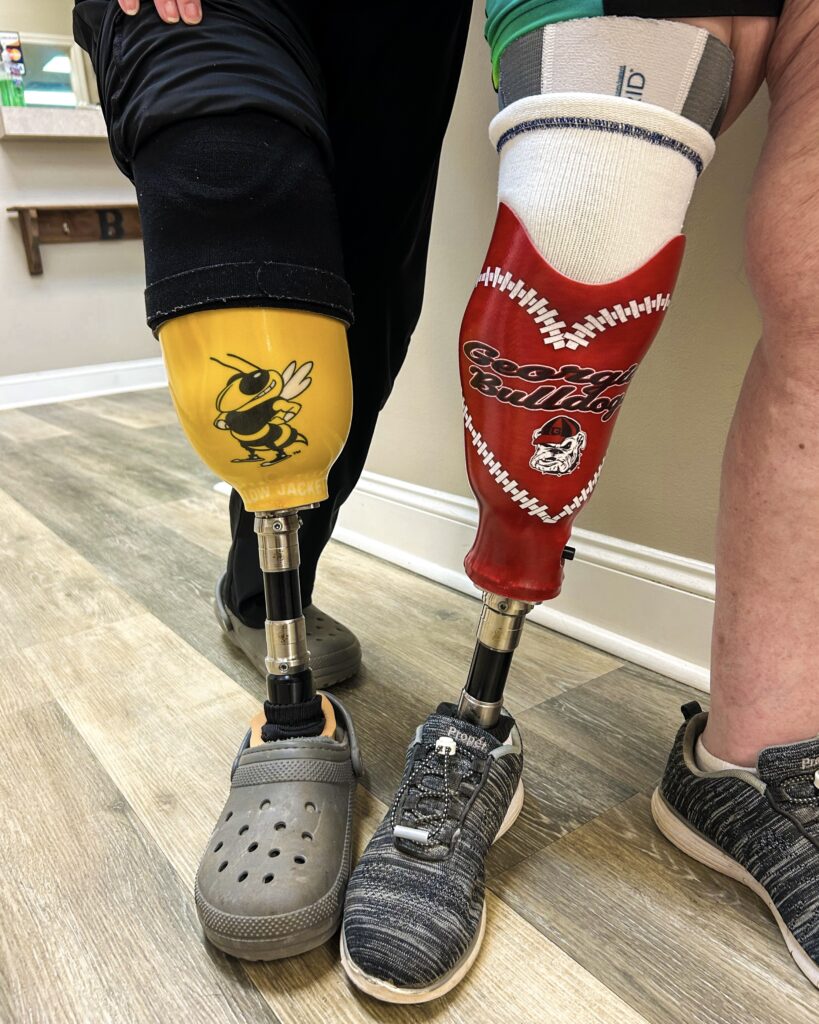
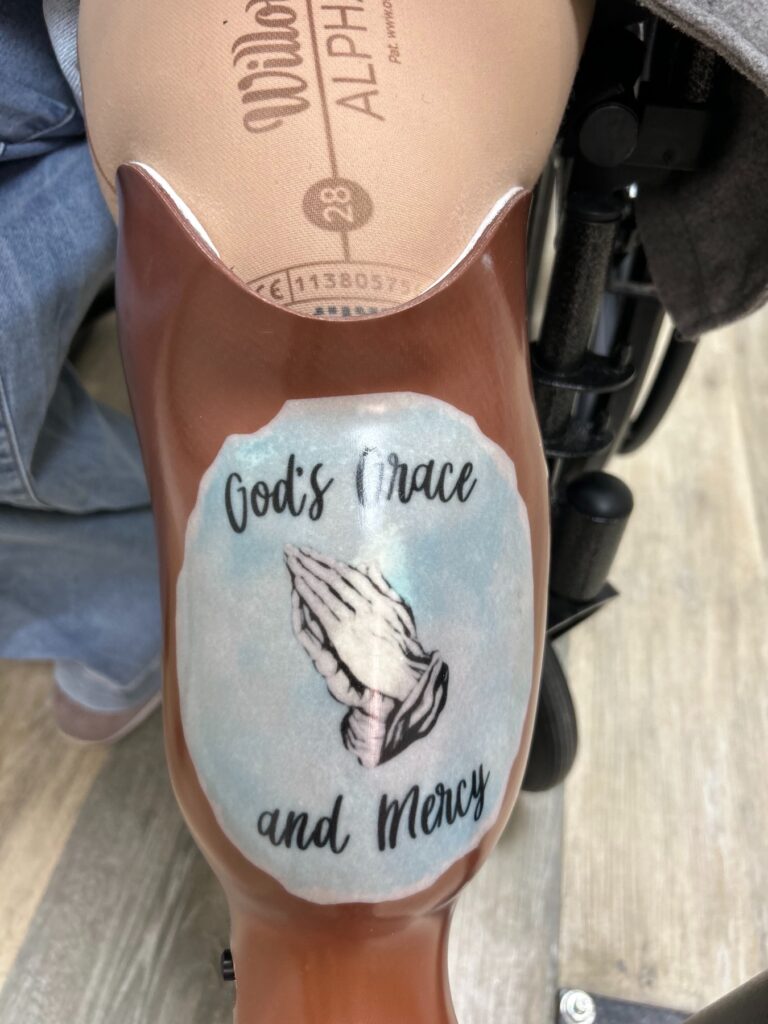
Boland Prosthetics and Orthotics Center now has the capability to incorporate 3D printing technology with our patients' prosthesis. Contact us for more details about what can be accomplished the with this new technology.
The step by step process of fitting a prosthesis is guided by your healing speed and your physician. The first step usually begins with the fitting of a compression sock called a shrinker. A shrinker is usually fit after removal of the staples or stitches if the suture line is closed. The shrinker helps to aid circulation and reduce swelling. This is an important step to shape the residual limb in preparation for casting.
Usually after 2 to 4 weeks of wearing a shrinker the initial swelling has gone down and the suture line has healed well enough for casting. The residual limb is wrapped in a plaster cast which is then hand shaped to distribute the desired amount of pressure to key areas on the residual limb. When the cast has hardened it is then removed and used to create a mold of the limb.
The next visit will be the check socket fitting. The check socket is a clear plastic cup which has been formed over the mold of the limb. When applied we will check the fit to ensure proper pressure distribution and tightness. If the fit is appropriate we will be ready to finish the prosthesis.
During this visit the user will stand, weight bear and walk on the prosthesis in the parallel bars. We will be making fine tune adjustments to ensure ideal alignment, comfort and function. Physical therapy is always encouraged to help the prosthetic user regain the function and independence they had prior to the amputation.
Unlike mechanical knees, MPKs use advanced sensors and microprocessors to continuously adjust resistance in real time. This means smoother walking, greater stability, and improved energy efficiency. Whether it’s navigating ramps, uneven terrain, or simply walking at your own pace, the knee adapts to you—not the other way around.